Founding Work
Yerbba
Translating Breast Cancer Records Into Patient-Readable Treatment Guidance.
The product’s core promise was simple: a patient gives consent once, and Yerbba produces a personalized report she can act on.
Yerbba is a personalized medical information platform for breast cancer patients. It turns clinical records into a plain-language report that helps patients understand their diagnosis, treatment options, care timeline, and questions to ask their care team.
Signature Artifact
Consent first, translation after
Yerbba's core product decision was to remove the patient data-entry burden. The patient gives consent once; the service turns clinical records into guidance she can read and use.
Zero-input service model
Records to report
- 01 Consent Patient authorizes access instead of retyping clinical history.
- 02 Records The service retrieves diagnosis, staging, biomarkers, and treatment context.
- 03 Translation Clinical details are structured into patient-readable guidance.
- 04 Report The patient sees care options, next steps, and questions for her team.
The Breakpoint
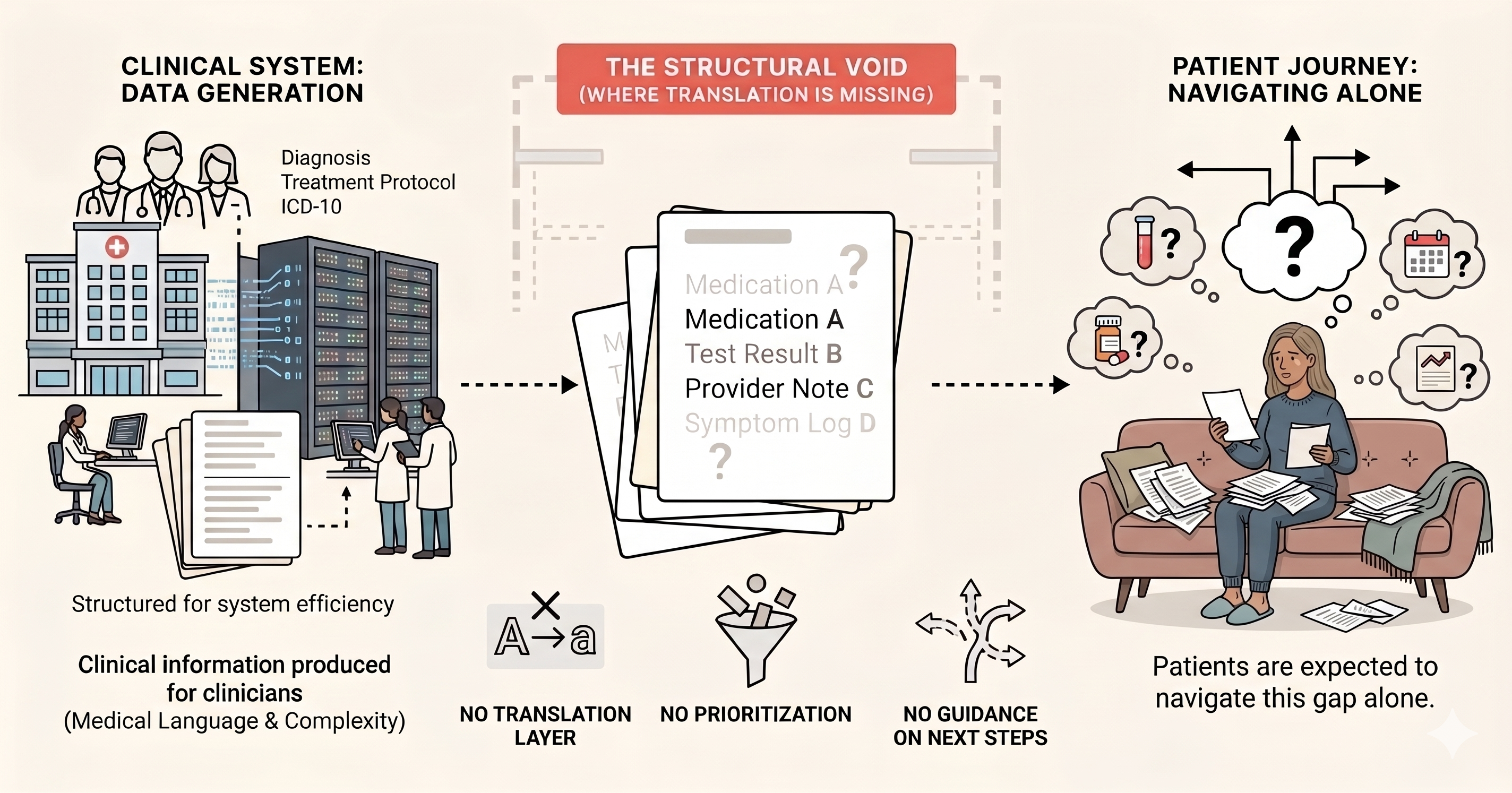
Breast cancer patients receive information at the moment they are least prepared to process it. Medical records are written for clinicians. Search results are generic. Doctor conversations are time-limited. Patients are left trying to connect diagnosis, staging, biomarkers, treatment options, clinical trials, side effects, and next steps on their own.
My Role
I co-founded Yerbba and led product design across service architecture, information architecture, patient-facing interfaces, and frontend implementation. The central design challenge was not simply making medical information easier to read. It was designing a system that could retrieve, interpret, prioritize, and present clinical information without asking patients to manually enter complex medical data.
Venture Formation
Turning A Patient Information Gap Into A Product Strategy: How we chose breast cancer, validated the patient need, shaped the business opportunity, and moved from vague idea to startup foundation.
Venture Formation
Turning A Patient Information Gap Into A Product Strategy: How we chose breast cancer, validated the patient need, shaped the business opportunity, and moved from vague idea to startup foundation.
Yerbba began with a structural question: why are patients expected to make life-altering health decisions with information written for someone else?
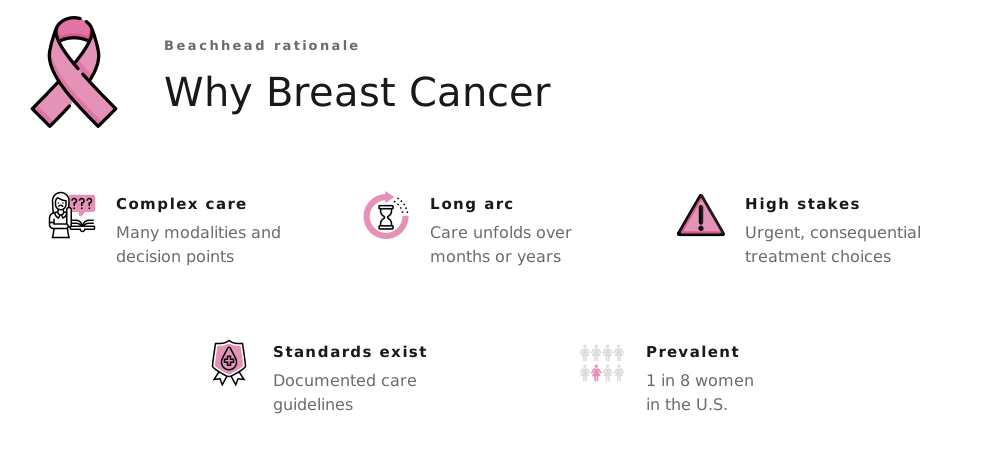
The early venture work focused on turning that question into a viable product direction. We narrowed the scope to breast cancer because the condition combined several important factors: a complex treatment journey, long decision timeline, high emotional stakes, well-documented standards of care, and a patient population actively seeking better information.
Market Opportunity: Access Created A Translation Gap
Patient experience
Digital record access
More uncertainty
Through customer discovery, we found that patients were not simply lacking information. They were surrounded by information they could not evaluate. Doctor conversations were constrained by time and liability. Online search produced generic, unreliable, or non-personalized guidance. Patient portals exposed records, but not meaning.
Policy, health IT adoption, and patient behavior were moving in the same direction. Patients had more access to medical information, but access alone did not help them understand what it meant for their care. Yerbba was designed for that translation gap.
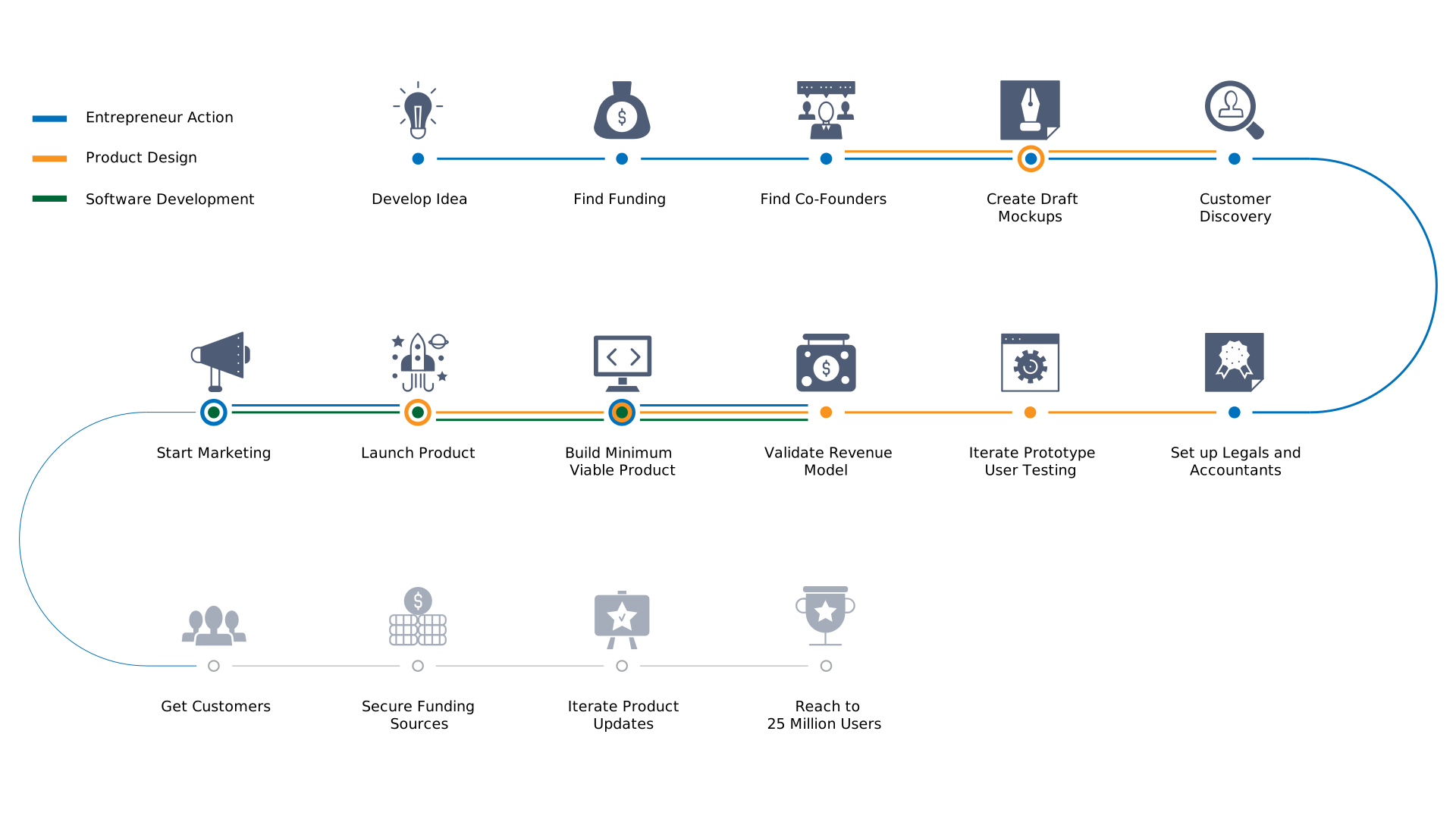
This early product roadmap outlines how Yerbba moved from concept to MVP: first validating the patient need, then defining the core report experience, building the service flow for consent-based record access, and translating clinical data into patient-readable treatment guidance. It shows the product taking shape around one central promise: help breast cancer patients understand their care options without asking them to manually decode their own medical records.
That insight shaped the business position: Yerbba would not be another education site. It would be a personalized clinical translator between the health system and the patient.
Design Response
I shaped Yerbba around a zero-input service model: patients should not have to translate their own clinical records before the product can help them. This principle drove the service flow, onboarding, data architecture, dashboard hierarchy, and report design.
Key Design Decision
Ask for permission, not clinical recall.
The product could not begin by asking patients to reconstruct a diagnosis they were still trying to understand. Consent became the primary action, and the interface did the translation work after that.
- ConsentAuthorize record access.
- RetrieveCollect clinical source material.
- PrioritizeSurface what needs attention first.
- ExplainTurn data into report guidance.
UX And Service Design
The Zero-Input Promise: How the service model, onboarding, report structure, and information architecture were designed around patients under stress.
UX And Service Design
The Zero-Input Promise: How the service model, onboarding, report structure, and information architecture were designed around patients under stress.
The defining UX decision was the zero-input promise. Asking patients to manually enter staging, biomarkers, treatment history, and diagnosis details would reproduce the burden Yerbba was trying to remove.
That principle forced the product architecture. Onboarding had to focus on consent, not data entry. The system had to retrieve and parse records. The interface had to expose confidence, gaps, and next steps without overwhelming the patient. The report had to be useful even when clinical data was incomplete or newly updated.
I developed a three-layer information architecture:
- Dashboard: current status, urgent actions, and orientation.
- Treatment Plan: personalized treatment options with plain-language explanations.
- Disease Index: deeper educational content for patients who want to understand more.
The design goal was not to simplify cancer. It was to make complexity navigable.
Core Product Decisions
- Make consent the primary patient action.
- Retrieve and update records automatically where possible.
- Translate clinical data into patient-readable report sections.
- Prioritize “what do I need to know next?” before deep education.
- Use progressive disclosure for patients who want more detail.
- Design components for incomplete, inconsistent, or changing records.
Consent
The first action reduces burden instead of asking patients to become medical data entry clerks.
Report
The interface leads with care timeline, treatment context, and questions patients can bring back to clinicians.
States
Components were planned around missing, partial, delayed, and updated records, not only ideal cases.
Frontend Build
Designing For Clinical Data Edge Cases: How building the React frontend changed the way I design for data variability, missing states, and implementation constraints.
Frontend Build
Designing For Clinical Data Edge Cases: How building the React frontend changed the way I design for data variability, missing states, and implementation constraints.
I built Yerbba's frontend in React.js, which made the gap between static design and live healthcare data impossible to ignore.
Patient records varied widely in completeness, formatting, and timing. A component could not assume every field existed. A timeline could not assume every event had the same level of certainty. A treatment recommendation could not assume all supporting clinical markers were available. The interface had to handle absence, ambiguity, and updates gracefully.
Designing for real data states
That experience changed my design practice. I began writing design specs around states, not screens: complete data, partial data, missing data, delayed retrieval, updated records, and clinical combinations that did not fit the happy path.
Yerbba taught me that in healthcare UX, frontend craft is not cosmetic. It is part of patient trust.
Outcome
Yerbba became a live product offering personalized breast cancer reports through a public product site and patient sign-up flow. The live product positions the Yerbba Report around personalized treatment options, diagnosis understanding, actionable insights, and patient confidence: yerbba.com